AI Code Review Pricing: Finding Affordable GitHub PR Automation in 2026
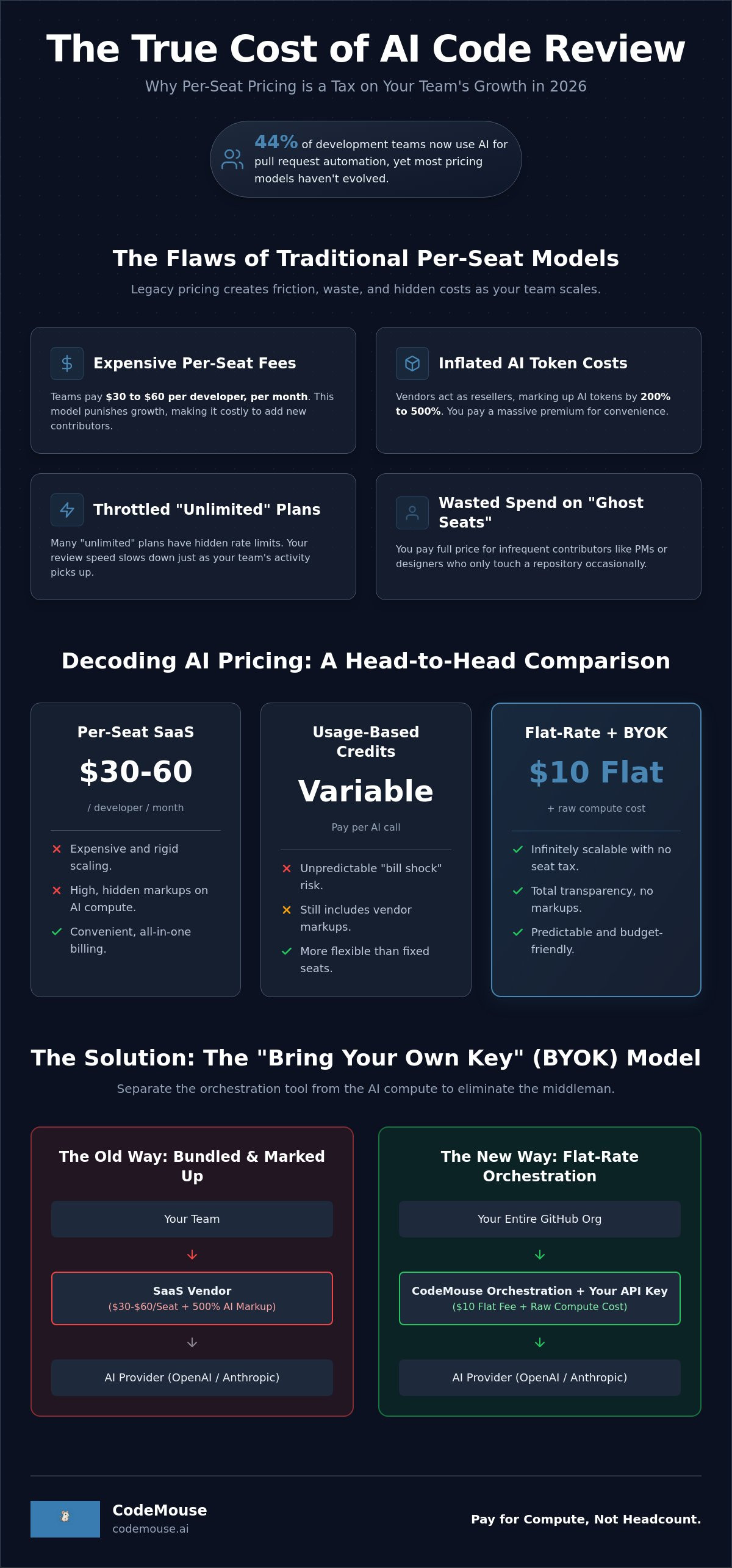
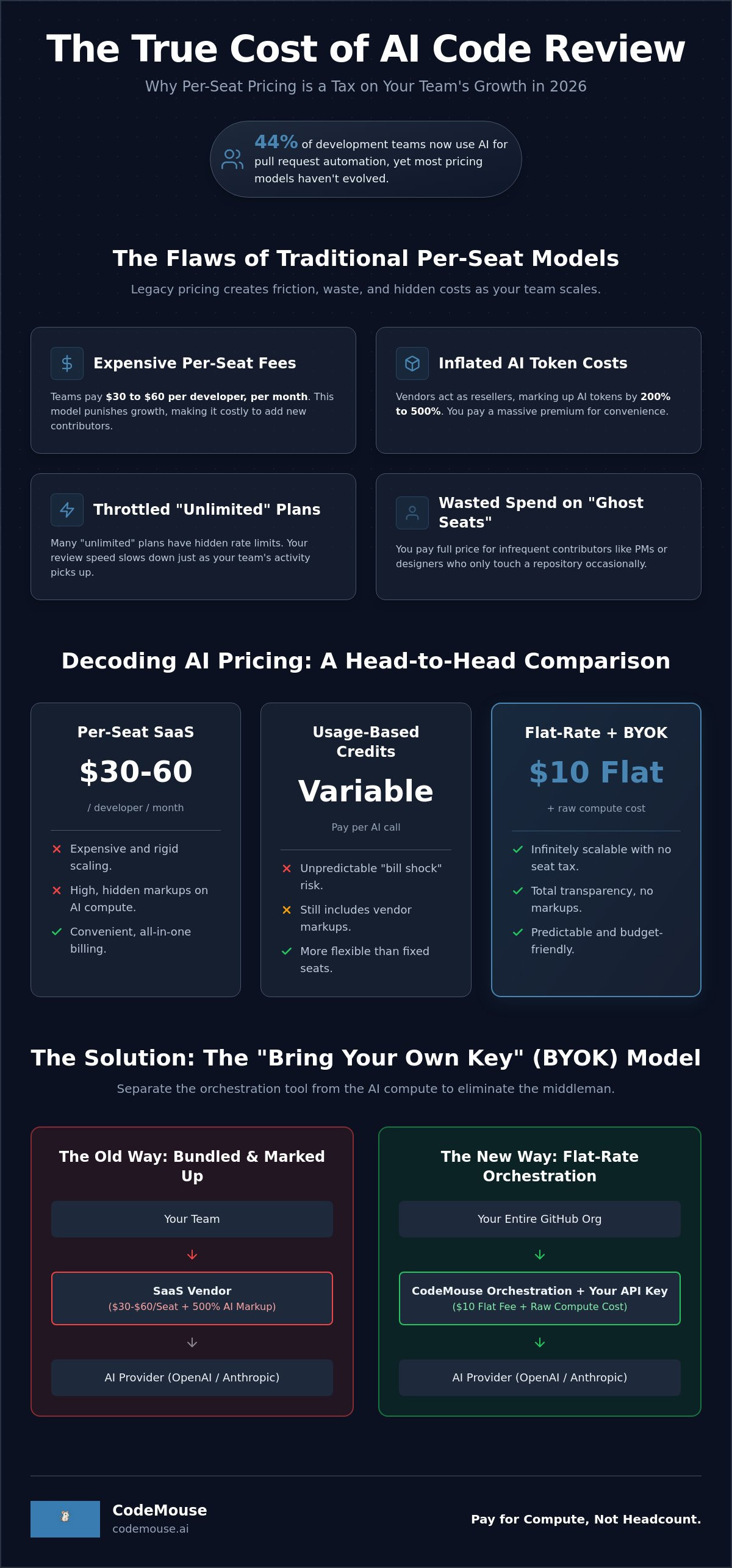
Per-seat pricing for engineering tools is a tax on growth that no longer makes sense in 2026. With 44% of development teams now using AI for pull requests, many are paying $30 to $60 per developer for automation. They often face throttled "unlimited" plans or hidden markups on AI tokens. It's an inefficient way to manage a budget when your AI code review pricing scales with headcount rather than actual compute needs. You feel the friction of adding new contributors when every seat adds a fixed monthly cost to your DevOps stack.
This article provides a pragmatic breakdown of the current market. We examine why the traditional subscription model is failing modern engineering teams. We will look at the shift toward flat-rate orchestration and "Bring Your Own Key" (BYOK) models using Claude and GPT. Expect a clear path to achieving seamless GitHub integration and high-quality feedback without the seat tax. We also cover how to avoid hidden costs like GitHub Actions minutes and redundant security scanning fees that often inflate enterprise bills.
Key Takeaways
- Compare per-seat versus flat-rate models to find the most scalable solution for your engineering team size.
- Identify hidden markups on AI tokens that can inflate your AI code review pricing by up to five times the actual compute cost.
- Calculate the ROI of automated PR reviews by measuring time saved on first-pass feedback against the cost of production hotfixes.
- Learn how the "Bring Your Own Key" (BYOK) approach eliminates provider throttling and ensures transparent billing through direct API access.
- Streamline your GitHub workflow with high-quality LLM feedback while avoiding the unnecessary "seat tax" of enterprise-level tools.
The Landscape of AI Code Review Pricing in 2026
The industry has transitioned from rigid static analysis to LLM-driven reasoning. This evolution changed the fundamental value of a code review from simple syntax checking to deep semantic analysis. In 2026, 44% of development teams use AI for pull request automation. However, pricing models haven't kept pace with this technical shift. Most vendors still rely on seat-based licensing. This creates friction for growing teams. It forces managers to choose which developers get access to automation. That choice is a bottleneck. AI code review pricing should reflect utility, not headcount.
The market is currently split between enterprise heavyweights and pragmatic builders. Large vendors bundle AI credits into expensive tiers, often charging $30 to $60 per developer. This model prioritizes vendor revenue over engineering efficiency. Modern teams are moving toward transparent, consumption-based models. They want to pay for the compute they use. CodeMouse facilitates this shift by offering a $10 flat-rate orchestration layer. It removes the middleman from the AI token exchange. It democratizes high-end reviews by letting teams use their own Anthropic or OpenAI keys directly.
The Problem with Legacy Seat-Based Licensing
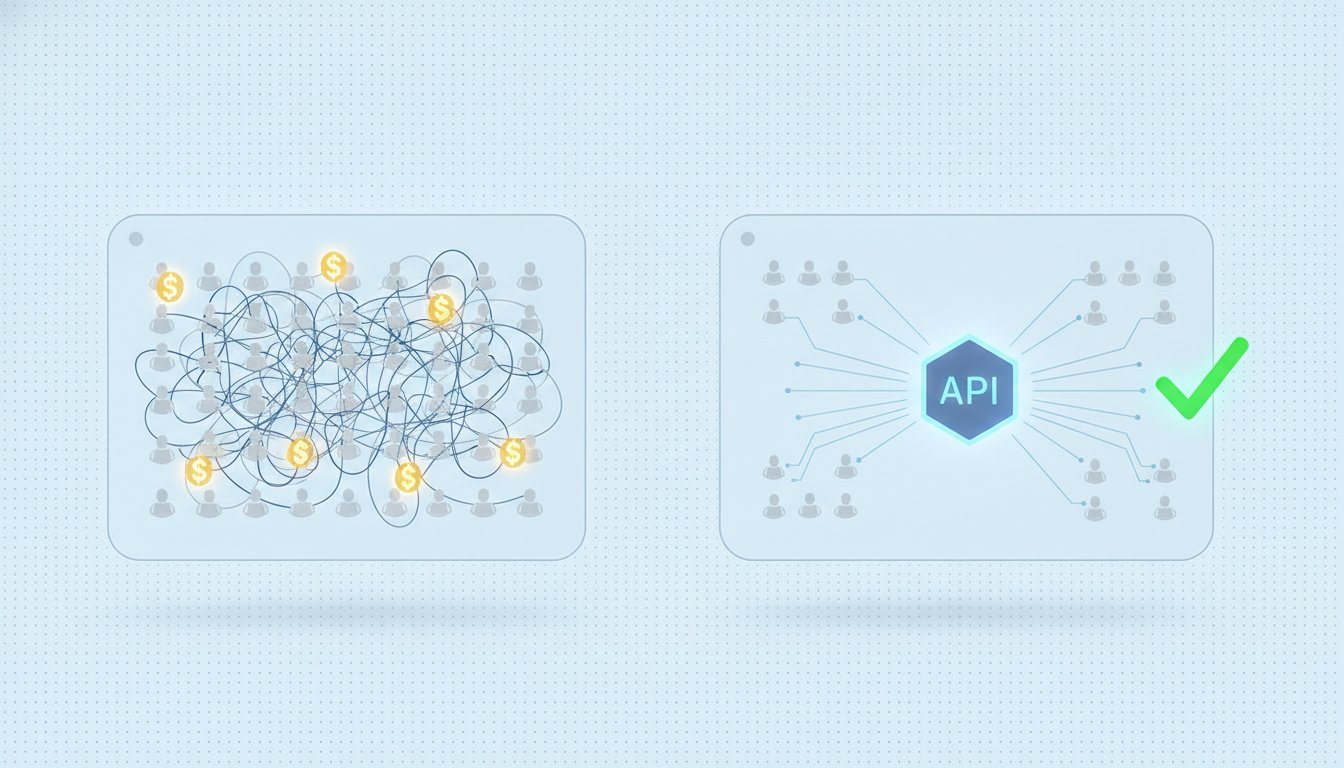
Seat-based models create "ghost seats." You pay for infrequent contributors, like designers or project managers, who only occasionally touch a repository. It's an inefficient allocation of capital. Teams often limit tool access to core developers to stay under budget. This fragments the workflow. Some PRs get high-quality AI feedback; others don't. Administrative overhead is another hidden cost. Managing license seats takes time away from shipping features. It's a manual task that shouldn't exist in an automated world. If your team scales from 10 to 50 developers, your costs shouldn't quintuple for the same automation logic.
Bundled Credits vs. Consumption Transparency
Vendors often act as high-margin resellers for AI tokens. They buy compute from providers like OpenAI and sell it back to you at a premium. This markup can range from 200% to 500% of the actual cost. It's a convenience fee that quickly becomes a burden at scale. The "unlimited" plan is another trap. These plans usually include hidden rate limits or throttling once you hit a certain volume. Your reviews slow down just when you need them most. Technical teams prefer direct control over their AI spend. By bringing your own API key, you pay the raw cost for Claude or GPT models. You see exactly what you spend on tokens. There are no surprise bills or artificial performance caps. It's a cleaner, more predictable way to manage DevOps infrastructure.
Decoding AI Pricing Models: Per-Seat vs. Flat-Rate
Market models for AI code review pricing are currently fractured. You generally face three choices: per-seat SaaS, usage-based credits, or flat-rate orchestration. Each model impacts your Total Cost of Ownership (TCO) differently as your team grows. For a 10-person engineering team, monthly costs in 2026 can range from $15 to $600. This 40x variance often stems from how vendors package the underlying compute. Understanding these structures is vital because AI is revolutionizing the software development process, but it shouldn't bankrupt your DevOps budget.
Predictability is the primary concern for engineering leads. Per-seat models offer a fixed monthly bill per head, which is easy for accounting but punishes growth. If you hire five new developers, your automation bill jumps immediately. Usage-based models offer more flexibility but create "bill shock" when a large refactor triggers thousands of API calls. Free tiers exist but are usually limited. Most break after 50 credits or restrict usage to a single developer. They serve as a proof-of-concept rather than a production-ready solution.
The SaaS Subscription Model (Tiered)
This is the traditional approach. You pay a set fee, often $30 to $45 per developer, for a bundled experience. It's convenient. You don't manage API keys. One bill covers everything. However, the downsides are significant for technical teams. You're paying a high markup on the actual AI tokens. These vendors buy compute from Anthropic or OpenAI and resell it to you with a convenience premium. Scaling is expensive and rigid. You often pay for "ghost seats" occupied by infrequent contributors who only submit one PR a month. It's a low-efficiency spend for high-growth startups.
The Flat-Rate Orchestration Model
This model separates the tool from the compute. You pay a predictable $10 fee for the orchestration layer and bring your own API key. It eliminates the seat tax entirely. One subscription covers your entire GitHub organization regardless of headcount. It's the best path for teams seeking affordable AI code review without compromising on model quality. The only requirement is managing your own OpenAI or Anthropic credentials. This gives you direct control over your spend. You pay the raw cost for the tokens you actually consume. There's no middleman taking a cut of your AI usage. If you want to optimize your workflow, you can start a free trial to see how flat-rate billing stabilizes your monthly DevOps expenses.
The Hidden Costs of Enterprise AI Review Tools
Sticker prices for developer tools are often deceptive. While a per-seat license might look manageable on a spreadsheet, the actual AI code review pricing often includes layers of unstated fees. These costs manifest as API markups, integration taxes, and "context" premiums. For a growing engineering team, these hidden variables can double or triple the expected monthly spend. Efficiency requires looking past the base subscription to understand the true cost of the underlying compute and administrative overhead.
Evaluating tool value also requires measuring "Senior Debt" reduction. This is the time senior engineers spend fixing basic logic errors or style inconsistencies in junior PRs. If a tool costs $500 a month but saves ten hours of a lead developer's time, the ROI is clear. However, if that same result can be achieved for a fraction of the price by stripping away vendor markups, the enterprise tool becomes a liability. Pragmatic teams prioritize utility over polished sales decks.
Understanding the API Markup
Most AI review vendors act as intermediaries. They purchase tokens from Anthropic or OpenAI at wholesale rates and resell them to you within a bundled plan. This convenience often carries a 2x to 5x premium. You pay for the vendor's profit margin on every line of code analyzed. This is why "Bring Your Own API Key" is the most best value code analysis strategy. It provides direct access to raw compute costs without the middleman. You only pay for what you use; nothing more. BYO-key models allow users to benefit from LLM price drops instantly.
Enterprise "Add-ons" That Should Be Standard
The "Enterprise Tax" is a common hurdle in DevOps procurement. Features that are functionally simple, like SSO or SAML integration, are often locked behind high-tier plans. You might find a tool that costs $15 per seat, only to discover that private GitHub Enterprise support requires a "Contact Sales" conversation. This wall is a reliable signal for high-margin, opaque pricing structures. Other common add-ons include:
- Priority Support: Paying extra for response times that should be standard for production tools.
- Advanced Indexing: Charging a premium for the tool to "remember" your codebase context.
- Audit Logs: Locking security compliance features behind the most expensive tiers.
Context indexing is particularly expensive in bundled models. Analyzing your entire repository for deep reasoning requires thousands of tokens. In a per-seat model, the vendor must limit this context to protect their margins. This results in shallower reviews. By using a flat-rate orchestration layer like CodeMouse, you control the depth of analysis. You decide if a PR warrants a deep, context-heavy review from Claude 3.5 Sonnet or a quick pass from a smaller, cheaper model. This autonomy is essential for managing a modern engineering budget.
Calculating ROI: When Does Affordable AI Code Review Make Sense?
ROI in DevOps is a function of time saved and errors prevented. Calculating the value of automation requires looking at the delta between manual labor and an automated "first pass." AI code review pricing is only one part of the equation. The more significant variable is the cost of developer hours. In 2026, a production hotfix can cost thousands in lost uptime and engineering resources. A $10 flat-rate subscription is a negligible insurance policy against these failures. The math favors automation for any team shipping code more than twice a week.
Developer Experience (DX) is another critical metric. Review bottlenecks kill momentum. When a developer waits four hours for a human to spot a missing null check, the project stalls. AI reviewers provide instantaneous feedback. This allows the author to fix trivial errors before the human reviewer even opens the PR. It turns the human review into a high-level architectural discussion rather than a hunt for syntax errors.
The Developer Hour Formula
Senior developer time is expensive. A $10 monthly fee represents less than 15 minutes of senior engineering time in most markets. If the tool saves more than a quarter-hour per month, the ROI is positive. Most teams find the savings are much higher. An automated reviewer can save two to four hours per developer per week by catching "low-hanging fruit" bugs. This doesn't even account for the context switching cost. Every time a developer stops their current task to review a PR, they lose focus. AI handles the initial grunt work, preserving human focus for complex problem solving.
ROI for Scaling Teams
Startups face the challenge of maintaining quality during rapid hiring. New hires often lack the context of existing style guides or security protocols. Using AI code review for GitHub helps maintain these standards automatically. It acts as a persistent mentor that never misses a linting error or a deprecated API call. This allows you to scale without needing to hire additional senior engineers just to manage the PR queue.
Flat-rate pricing is essential for venture-backed teams. Per-seat AI code review pricing creates a financial penalty for every new hire. It adds unnecessary friction to the onboarding process. A predictable, flat-rate model ensures that your DevOps budget remains stable as your headcount grows. It provides the necessary infrastructure for scale while keeping your burn rate predictable. To start optimizing your team’s efficiency, integrate CodeMouse into your GitHub workflow today.
CodeMouse: The $10 Flat-Rate Alternative for GitHub Teams
CodeMouse addresses the inefficiencies of traditional AI code review pricing by removing the seat tax. Most tools charge you for every developer, regardless of their activity level. We don't. Our model is a flat $10 monthly fee for your entire GitHub organization. This includes unlimited repositories and unlimited team members. It’s a tool built for builders who value utility over bloated enterprise features. You get professional-grade feedback without the administrative burden of managing licenses.
Flexibility is at the core of our infrastructure. We support both Anthropic’s Claude and OpenAI’s GPT models. This multi-model support allows you to toggle between providers as performance benchmarks shift or token costs decrease. You aren't locked into a single vendor's ecosystem. If Claude 3.5 Sonnet offers better reasoning for a specific project, you can use it. If GPT-4o is more cost-effective for another, the choice is yours. We provide a 14-day free trial so you can validate this feedback quality in your own environment before committing.
Minimalist Integration, Maximum Utility
Setup is fast. You can install our GitHub App and be operational in under 2 minutes. We prioritize a low-friction entry point. The tool provides context-aware feedback directly on your pull requests. It avoids the noise of legacy static analysis tools. CodeMouse leverages automated code review logic to identify logical bugs and architectural flaws. It focuses on what matters: the semantic meaning of your changes. It’s an efficient layer that enhances your existing CI/CD pipeline without adding unnecessary complexity.
Getting Started with Predictable Pricing
Transparency is our default setting. To get started, you simply provide your own Anthropic or OpenAI API keys. You pay us for the orchestration; you pay the AI providers for the tokens. This "Bring Your Own Key" (BYOK) model ensures you never pay a markup on compute. You can monitor your own usage through your provider's dashboard to avoid surprises. CodeMouse provides the orchestration layer while you retain control of the data and costs. It’s a clean separation of concerns. You get the power of the world’s best LLMs with the predictability of a flat-rate subscription. It’s the most pragmatic way to manage your AI code review pricing in a scaling environment.
Future-Proof Your PR Automation Strategy
The transition toward transparent, utility-based models is inevitable. Per-seat licensing creates artificial barriers to growth and hides the true cost of compute. By adopting a "Bring Your Own Key" approach, you eliminate vendor markups and gain direct control over your LLM spend. This ensures your AI code review pricing remains predictable even as your team scales from ten to a hundred developers. High-quality feedback from models like Claude 3.5 Sonnet and GPT-4o should be a standard utility, not an expensive luxury.
Efficiency in 2026 means stripping away the "seat tax" and focusing on shipping features. You don't need bloated enterprise tiers to get deep, context-aware analysis. You need a functional orchestration layer that integrates seamlessly and stays out of your way. It's about maximizing developer output while minimizing administrative overhead and technical debt. Focus on the logic of your codebase; let the automation handle the first-pass verification.
Start your 14-day free trial of CodeMouse for $10/month. It's a flat fee with no per-seat charges and full support for Claude 3.5 and GPT-4o. Experience high-quality automation that respects your budget and your engineering autonomy. Build faster and scale without the friction of legacy licensing.
Frequently Asked Questions
How much does AI code review typically cost per developer?
Industry rates in 2026 vary widely, with per-seat subscriptions typically ranging from $15 to $60 per developer each month. These costs usually bundle the software license with AI compute fees. This model creates a linear cost increase as your team grows. It often leads to budget friction for high-growth engineering teams. Understanding the nuances of AI code review pricing is essential for long-term DevOps planning.
Is it cheaper to use a flat-rate tool like CodeMouse or a per-seat tool?
Flat-rate tools are significantly more cost-effective for teams with more than one or two developers. A flat $10 fee covers your entire organization, whereas per-seat models multiply their rate by your total headcount. For a 10-person team, switching to a flat-rate model can reduce your monthly software overhead by hundreds of dollars. It provides the same high-quality feedback without the financial penalty of hiring more engineers.
What are the benefits of bringing my own API key for code reviews?
Bringing your own API key ensures you pay raw compute costs without vendor markups. You benefit from immediate price drops from providers like Anthropic or OpenAI. This approach also prevents vendor throttling on so-called "unlimited" plans. You retain full control over your data usage. You can monitor token consumption through your own provider's dashboard for total transparency and budget control.
Does CodeMouse charge extra for multiple GitHub repositories?
No, the $10 flat fee includes unlimited repositories within your GitHub organization. There are no hidden tiers based on codebase size or the number of active projects. This allows you to scale your infrastructure without worrying about incremental costs. You can automate reviews across your entire stack using a single, predictable subscription. It’s a pragmatic solution for modular, microservice-heavy environments.
Can I use both Claude and GPT-4 with CodeMouse?
Yes, CodeMouse supports both Anthropic and OpenAI models. You can toggle between Claude 3.5 and GPT-4o based on your specific reasoning needs or budget. This flexibility prevents vendor lock-in. It allows your team to leverage the best-performing LLMs as the competitive landscape for AI models evolves. You choose the model that provides the best balance of speed and depth for each project.
Is there a free trial available for CodeMouse AI Code Review?
CodeMouse offers a 14-day free trial for all new users. This allows you to test the integration and feedback quality on your own pull requests without financial commitment. It is a zero-risk way to evaluate how the tool handles your specific codebase and coding standards. You can validate the utility of the orchestration layer before starting the $10 monthly subscription.
How do I calculate the total AI code review cost including API tokens?
Your total AI code review pricing consists of the $10 orchestration fee plus your raw token usage. Tokens are billed directly by your AI provider. Industry estimates for raw API consumption suggest most reviews cost only a few cents. For a typical team, the combined monthly cost remains well below the $30 to $60 per-seat industry average. You avoid the 2x to 5x markups common in bundled SaaS platforms.
Why do some AI code review tools require "Contact Sales" for pricing?
"Contact Sales" walls usually indicate high-margin enterprise pricing or complex service-level agreements. These vendors often lock basic features like SSO or private repository support behind opaque, negotiated contracts. This model targets large corporate budgets rather than efficient engineering teams. It lacks the transparency and speed required by modern, builder-centric organizations. Pragmatic teams prefer tools with clear, public pricing that they can self-serve.