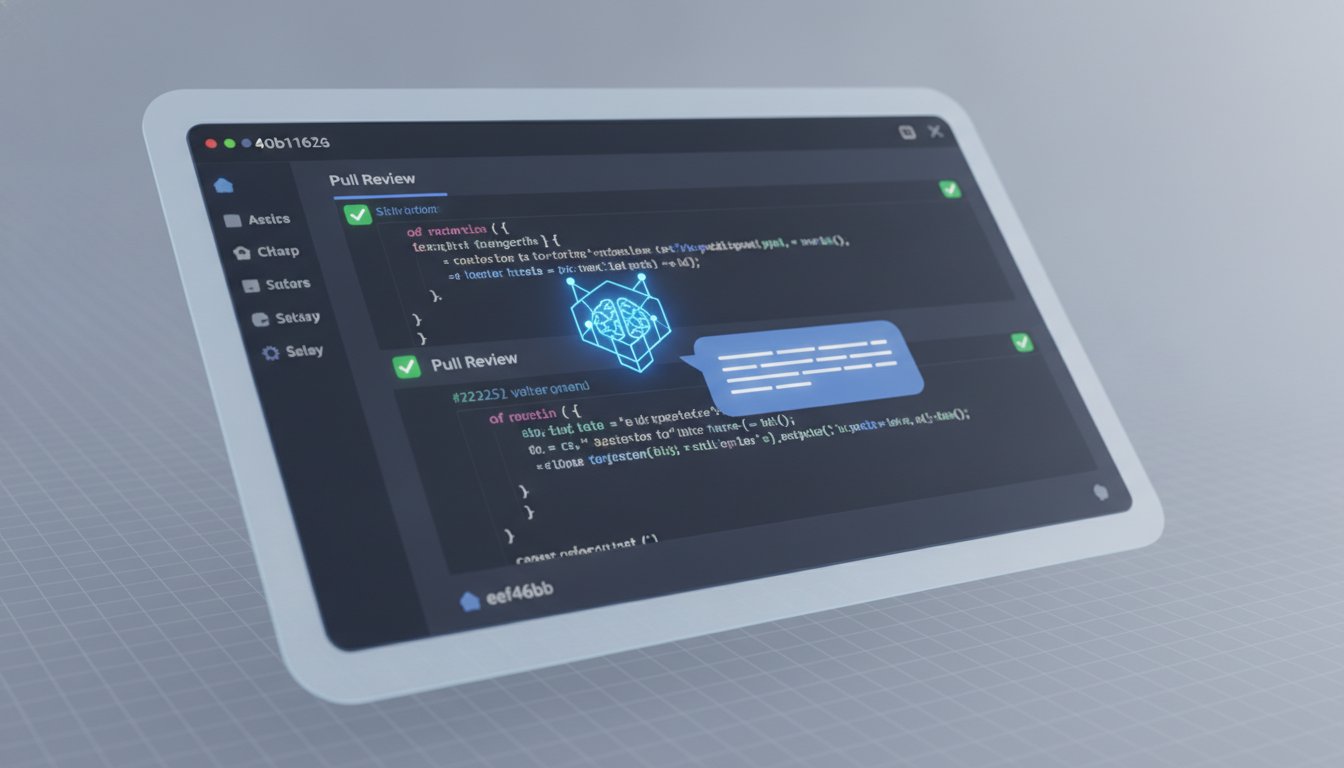
Automated PR Comments AI: Streamlining GitHub Review Workflows in 2026
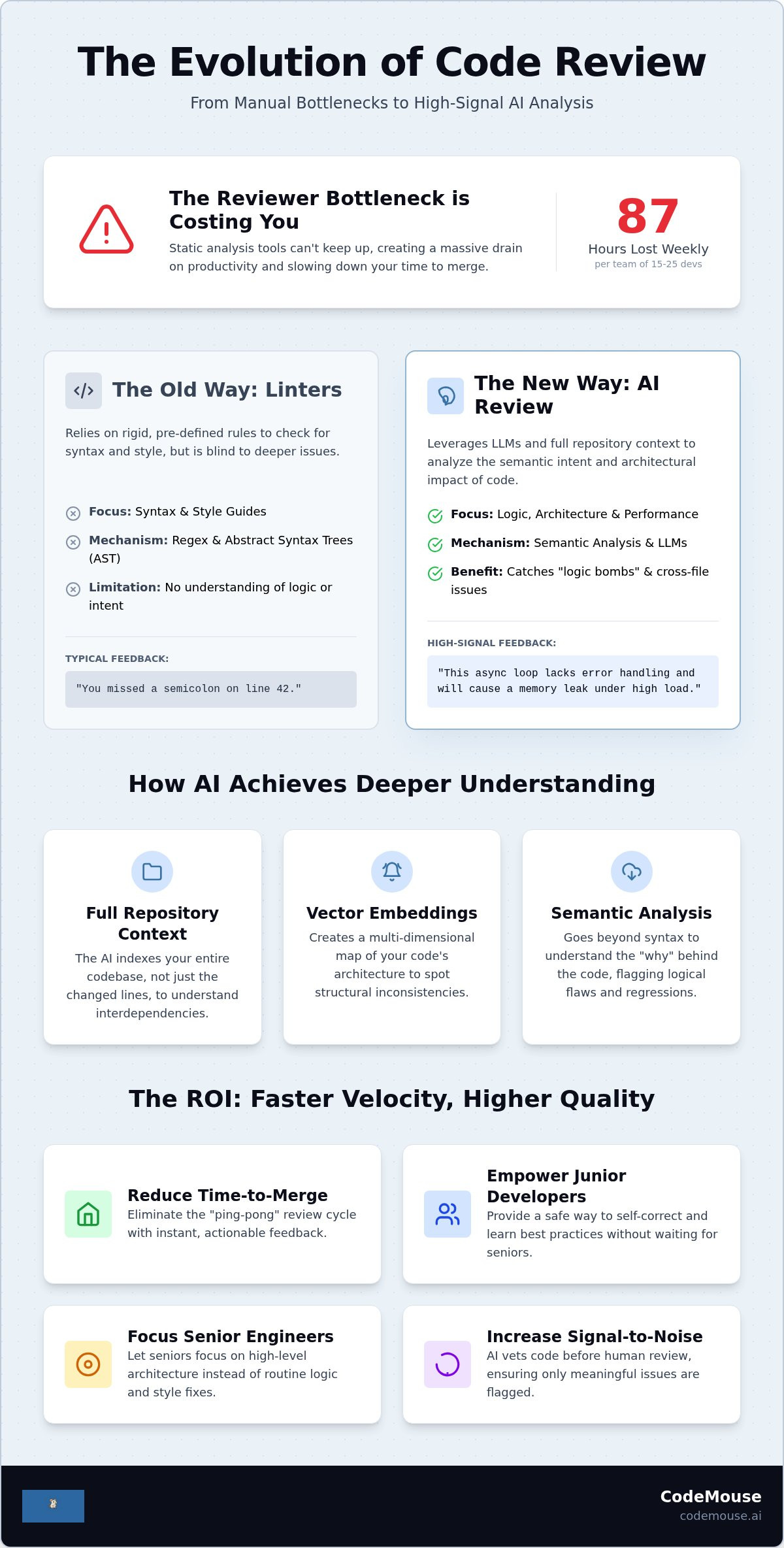
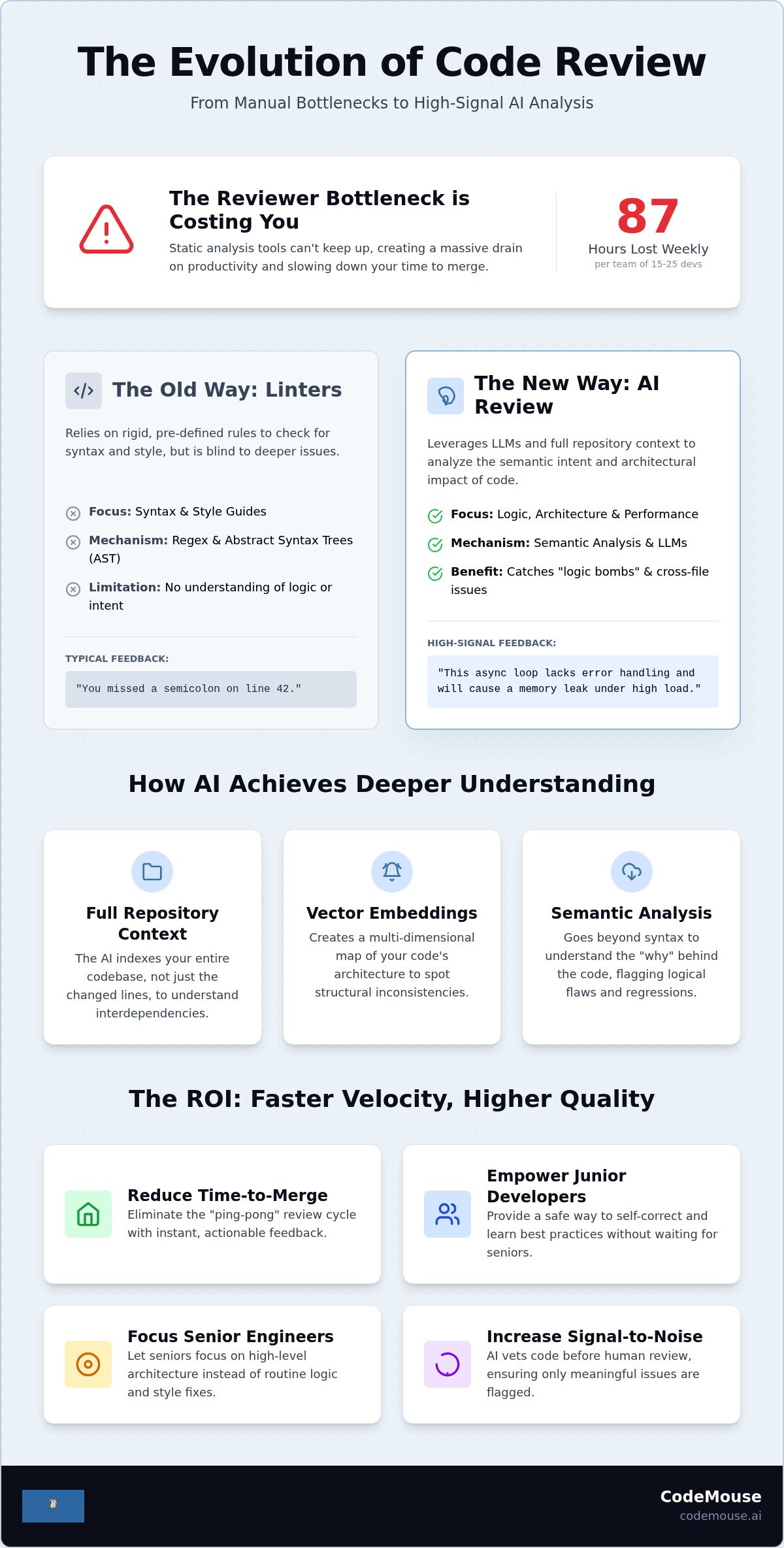
Teams of 15 to 25 developers lose an average of 87 hours every week to pull request bottlenecks, according to 2026 LinearB benchmarks. It's a staggering drain on productivity that static analysis tools can't solve alone. While standard linters flag syntax, they often miss the deeper logic errors and architectural missteps that lead to technical debt. Implementing automated PR comments AI changes this dynamic by shifting the burden of initial review from humans to high-signal machine intelligence directly within your GitHub workflow.
You've likely experienced the frustration of a critical feature stalling because your lead reviewer is overextended. It's a common friction point that slows down your mean time to merge and leaves junior developers feeling uncertain about their submissions. This guide explains how AI-driven feedback provides the context-aware insights needed to eliminate these manual review delays. You'll learn how to leverage multi-model consensus to get feedback that explains the logic behind every suggestion. We'll show you how to transform your review process into a streamlined engine for high-quality code without increasing senior developer burnout.
Key Takeaways
- Understand the transition from syntax-based linting to semantic analysis for catching complex logic and architectural errors.
- Learn how automated PR comments AI leverages full-repository context and vector embeddings to provide high-signal feedback.
- Implement multi-model consensus using Claude and GPT to ensure feedback accuracy and minimize reviewer fatigue.
- Streamline your GitHub workflow with a developer-first integration that prioritizes deployment speed and code integrity.
- Scale your team efficiently with a flat-fee pricing model that eliminates per-seat taxes while maintaining full cost transparency.
Table of Contents
The Shift from Static Analysis to Automated PR Comments AI
Traditional code quality tools have hit a ceiling. For decades, developers relied on static analysis to enforce style guides and catch syntax errors. While effective for maintaining a consistent codebase, these tools operate on rigid, deterministic rules. They cannot reason about why code is written or how it impacts the broader system. The Shift from Static Analysis toward automated PR comments AI represents a fundamental change in how teams handle peer reviews. Instead of just flagging a missing semicolon, AI analyzes the semantic intent of a change.
This technology utilizes Large Language Models (LLMs) to generate human-like feedback directly on GitHub pull requests. It doesn't just look for patterns; it understands context. In 2026, the "Reviewer Bottleneck" has become the primary constraint for high-velocity teams. Recent DORA reports indicate that while AI code generation has increased throughput, it has created a massive backlog at the review stage. Senior engineers are drowning in PRs. Automated PR comments AI serves as a first responder. It filters out obvious mistakes and provides high-signal feedback before a human ever looks at the code. This reduces reviewer hesitation. When a senior dev sees that the AI has already vetted the logic, their trust in the submission increases.
Why Linters Are No Longer Enough
Linters are limited by their design. They use regex or Abstract Syntax Trees (AST) to check for specific violations. If a rule isn't explicitly defined, the linter is blind. AI understands context and intent. It identifies "logic bombs" that pass CI/CD but fail in production. For example, a linter won't notice if an asynchronous loop lacks proper error handling or if a new dependency introduces a circular reference. AI moves the conversation from "you missed a semicolon" to "this loop will cause a memory leak under high load." It catches architectural flaws that previously required hours of manual scrutiny.
The Impact of AI on Merge Velocity
The manual review cycle is often a game of "ping-pong." A developer submits code, waits hours for a review, fixes a minor logic error, and waits again for approval. This cycle kills momentum. Automated comments break this loop. They empower junior developers to self-correct in real time. By receiving immediate, context-aware feedback, they fix errors before pinging a senior reviewer. This significantly reduces the mean time to merge (MTTM). Engineering teams see a direct ROI through faster feedback loops. High-signal AI feedback ensures that by the time a human joins the conversation, the code is already mature. This allows senior staff to focus on high-level strategy rather than trivial fixes.
How AI-Driven PR Comments Work: Beyond Regex and Linters
Traditional linters operate on a line-by-line basis. They lack the ability to understand how a change in one file ripples through an entire system. Modern automated PR comments AI solves this by moving beyond simple pattern matching. By integrating as a native GitHub App, these tools gain access to the full repository context. This allows the AI to provide feedback that feels like it came from a human peer who actually knows the codebase. It isn't just checking for style; it's evaluating logic.
The technical foundation relies on embeddings and vector databases. Instead of just looking at the diff, the system indexes your entire repository. This creates a multidimensional map of your code's architecture. Context-aware AI review uses repository-wide indexing to evaluate code changes against the existing codebase architecture rather than just isolated syntax. This is a critical distinction. It allows the model to catch inconsistencies that a standard CI check would miss. Implementing Automated PR Feedback at this scale requires sophisticated orchestration between LLMs and repository state.
Semantic Analysis: Understanding the "Why"
Senior developers don't need help finding missing brackets. They need help identifying architectural debt and potential performance regressions. Semantic analysis focuses on the logic and intent behind the code. While syntactic analysis checks the "what," semantic analysis explains the "why." For instance, the AI might recognize that a change in utils.js inadvertently breaks an assumption in auth.py. This cross-file awareness is what makes feedback high-signal. It respects developer time by only flagging issues that actually matter for system stability. For teams looking to implement this without the overhead, tools like CodeMouse AI Code Review provide this depth out of the box.
The Logic Behind Automated Feedback
The "intelligence" in these comments comes from meticulous prompt engineering and model selection. Automated PR comments AI typically utilizes top-tier models like Claude 3.5 or GPT-4o. These models are prompted with a specific reviewer persona. This persona is instructed to be pragmatic, concise, and technically accurate. When the AI analyzes a pull request diff, it doesn't just read the code; it evaluates it against best practices and the specific patterns found in your repo. It checks for edge cases, security vulnerabilities, and readability. The result is a set of comments that are actionable and contextually relevant, mirroring the thought process of a lead engineer.
Optimizing Feedback Loops: Signal vs. Noise in Automated Reviews
Productivity dies in the noise. When automated PR comments AI generates dozens of trivial suggestions per pull request, developers stop reading them. This is the "noise trap." It creates a culture of dismissal where critical warnings are buried under stylistic nitpicks. High-velocity teams require high-signal feedback. This means prioritizing impact over volume. Every comment must provide concrete value or it shouldn't exist. Signal matters. Noise distracts.
Filtering for impact requires a focus on core engineering pillars. High-signal systems prioritize:
- Security: Identifying SQL injections, hardcoded secrets, or improper sanitization.
- Performance: Flagging n+1 queries, memory leaks, or inefficient loops.
- Maintainability: Detecting circular dependencies or excessive function complexity.
The Case for Multi-Model Consensus
Relying on a single LLM is a strategic mistake. Every model has specific biases and failure modes. If one model hallucinates a bug, your workflow stalls. Multi-model consensus solves this. By running a diff through both Claude and GPT, the system can cross-verify findings. If both models identify the same architectural flaw, the confidence score is high. CodeMouse uses this consensus logic to filter out false positives. It ensures that the automated PR comments AI output is vetted by multiple layers of intelligence. This approach drastically reduces the "hallucination tax" that often plagues simpler, single-model tools.
Setting Feedback Thresholds
Automation is a tool, not a replacement for human judgment. You must configure your AI to match your team's specific standards. This involves setting thresholds for what constitutes a "Major" or "Critical" issue. Not every suggestion needs to be a blocking comment. Some should be suggestions; others should be ignored entirely. Implementing a GitHub PR review assistant helps balance this automation with human oversight. It allows you to define the "persona" of the reviewer. You can instruct the AI to focus strictly on performance regressions or security vulnerabilities. This creates a culture where AI feedback is respected as a silent partner. It keeps the focus on shipping stable code faster.
Implementing Automated PR Feedback in Production Workflows
Moving from manual oversight to an automated system requires a structured deployment. Integrating automated PR comments AI into your production environment isn't just about enabling a bot. It requires a systematic setup to ensure the tool aligns with your specific engineering standards. Follow this linear progression to move from installation to high-signal automation.
- Step 1: Install the GitHub App. Grant repository-level access. This provides the necessary webhooks to trigger analysis on every push. GitHub Apps handle authentication securely through short-lived tokens, maintaining a zero-trust security posture.
- Step 2: Configure Models and API Keys. Transparency is vital for cost control. Use your own API keys for models like Claude 3.5 or GPT-4o. This allows you to monitor token usage and ensures your data remains within your controlled AI environment.
- Step 3: Define Personas. Set the rules of engagement. Tell the AI if it should act as a strict performance auditor or a pragmatic mentor. Custom instructions ensure the feedback matches your team's internal style guide.
- Step 4: Monitor and Iterate. Feedback quality isn't static. Review the AI's comments for accuracy. Adjust your prompts if the feedback becomes noisy or misses specific architectural patterns unique to your codebase.
Native GitHub Integration
GitHub Apps are superior to custom CLI tools or local scripts. They integrate directly into the PR UI, making automated PR comments AI feel like a native part of the developer experience. They manage rate limits and file size constraints more effectively than custom implementations. When handling large PRs, native integrations can intelligently chunk files or focus on high-impact logic changes. This ensures the analysis doesn't time out or lose context during deep architectural reviews. It keeps the workflow fast and predictable.
Integrating AI into CI/CD
Treat AI review as a required status check. If the AI flags a critical logic error or a security vulnerability, the PR should not be merged until addressed. Combine these comments with your existing automated test suites. While unit tests catch regressions, AI catches intent-based errors. This multi-layered approach ensures that AI code review for GitHub scales quality across large organizations. It bridges the gap between raw code generation and stable production deployments. Ready to deploy? Get started with CodeMouse AI Code Review to automate your first repository today.
CodeMouse: High-Signal AI Reviews for GitHub Teams
CodeMouse is built for teams that prioritize utility over flashy features. It functions as a focused, no-nonsense innovator in the code review space. By providing automated PR comments AI through a native GitHub App, it eliminates the manual review bottleneck without adding unnecessary complexity. It utilizes a multi-model consensus approach. Feedback is generated by cross-referencing insights from Claude 3.5 and GPT-4o. This ensures that every comment provides architectural depth rather than just syntactic nitpicking. It acts as a silent partner that enhances your existing habits without demanding a total overhaul of your workflow.
The pricing structure is designed for scalability. Many industry tools charge high per-user fees that penalize growing engineering departments. CodeMouse uses a flat $10/month model for unlimited team members and repositories. This removes the per-seat tax that often hinders AI adoption in larger organizations. You receive unlimited reviews for a predictable, fixed cost. It's a pragmatic solution for teams that need to maintain high standards while keeping budgets under control. This model ensures that high-quality feedback is accessible to every developer on the team, regardless of headcount.
Why "Bring Your Own API Key" Matters
The Bring Your Own API Key (BYO-API) model ensures total cost transparency. You pay only for the tokens your team actually consumes. There is no hidden AI tax or markup on model usage. This approach also addresses critical security and privacy concerns. Using your own API keys means your code is processed under your existing provider agreements with Anthropic or OpenAI. It provides the flexibility to toggle between the latest models as they are released throughout 2026. You maintain full control over your infrastructure, your data footprint, and your spending.
Getting Started with CodeMouse
Deployment is straightforward. You can start a 14-day free trial with zero friction. Integration with your GitHub workflow takes under two minutes. Install the app, provide your API key, and the system begins analyzing pull requests immediately. It requires no extensive training or complex configuration. CodeMouse delivers senior-engineer-level PR feedback for just $10 a month, empowering teams to scale code quality without scaling costs. It's a simple, effective tool for developers who value their time and need immediate results. Start your trial today and see the impact of high-signal automated PR comments AI on your merge velocity.
Accelerate Your Path to Production
The shift from basic linting to semantic analysis is essential for maintaining velocity in 2026. Implementing automated PR comments AI allows your team to move beyond simple syntax checks and address deep logic errors before they reach human review. By utilizing repository-wide indexing and multi-model consensus, you ensure that every comment adds concrete value to the codebase. This approach reduces reviewer fatigue and empowers developers to submit with confidence.
CodeMouse offers a lean, developer-first solution with a flat $10/month pricing model and no per-seat charges. It leverages both Claude and GPT to provide accurate, consensus-driven feedback while you maintain full transparency through your own API keys. Start your 14-day free trial of CodeMouse AI Code Review to see the results in your own workflow. It's time to stop managing bottlenecks and start shipping higher-quality code.
Frequently Asked Questions
How does automated PR comments AI differ from a linter?
Automated PR comments AI differs from a linter by analyzing semantic logic rather than just syntax. Linters use rigid, deterministic rules to flag style violations like missing semi-colons. AI uses Large Language Models to understand the intent behind code changes. It can identify complex architectural flaws, security risks, and performance regressions that traditional static analysis tools often miss entirely. It reasons about the code like a human reviewer.
Will AI PR comments slow down my GitHub Actions or CI/CD pipeline?
No, these reviews run asynchronously as a GitHub App. They don't consume your GitHub Actions minutes or block your CI/CD runners. The analysis triggers via webhooks when you push code. Feedback appears in your PR timeline as soon as the model processing completes. This usually happens within seconds or minutes depending on the size of the diff. It keeps your pipeline lean and fast.
Can I customize the "personality" or strictness of the AI reviewer?
Yes, you can define specific reviewer personas through custom system prompts. You might want a strict auditor for security-critical repositories or a helpful mentor for internal tools. This allows you to set the tone and focus of the automated PR comments AI to match your team's existing engineering standards. You control the strictness and the specific categories of feedback the AI provides during the review process.
How does CodeMouse handle code privacy and security?
CodeMouse prioritizes security through a "Bring Your Own API Key" model. Your code is processed using your existing enterprise agreements with providers like Anthropic or OpenAI. We never use your proprietary data to train models. The GitHub App uses granular permissions to access only the specific repositories you authorize. This ensures your code remains within your controlled environment while receiving high-signal feedback from the models you trust.
What happens if the AI provides incorrect or "hallucinated" feedback?
Hallucinations are minimized through multi-model consensus logic. By cross-referencing findings between Claude and GPT, the system filters out low-confidence suggestions before they reach your PR. If the AI does provide an incorrect comment, developers can simply dismiss it or provide feedback. This human-in-the-loop approach helps refine your custom prompts and improves the accuracy of future reviews over time as the system learns your preferences.
Is there a limit to how many pull requests the AI can review per day?
CodeMouse does not impose a limit on the number of pull requests reviewed per day. Your flat monthly subscription covers unlimited reviews for your entire team and all authorized repositories. The only practical limits are the rate limits associated with your specific OpenAI or Anthropic API tier. This model allows you to scale your review process without worrying about per-seat taxes or unpredictable usage caps as your team grows.
Does automated PR feedback work with languages like TypeScript, Python, and Go?
Yes, the system supports all major programming languages including TypeScript, Python, Go, Rust, and Java. Because the underlying LLMs are trained on vast amounts of public code, they understand the idioms and best practices of almost any modern language. Context-aware analysis ensures feedback is relevant to your specific stack and architectural patterns. It works across your entire polyglot codebase without requiring any extra language-specific configuration.
Can I use my own OpenAI or Anthropic API keys with CodeMouse?
Yes, using your own API keys is the standard configuration for CodeMouse. This ensures you only pay for the tokens you use without any platform markup. It also gives you the flexibility to choose specific model versions, such as GPT-4o or Claude 3.5 Sonnet, as they evolve. You maintain full control over your AI spending and data privacy agreements with your chosen providers throughout the entire lifecycle.