
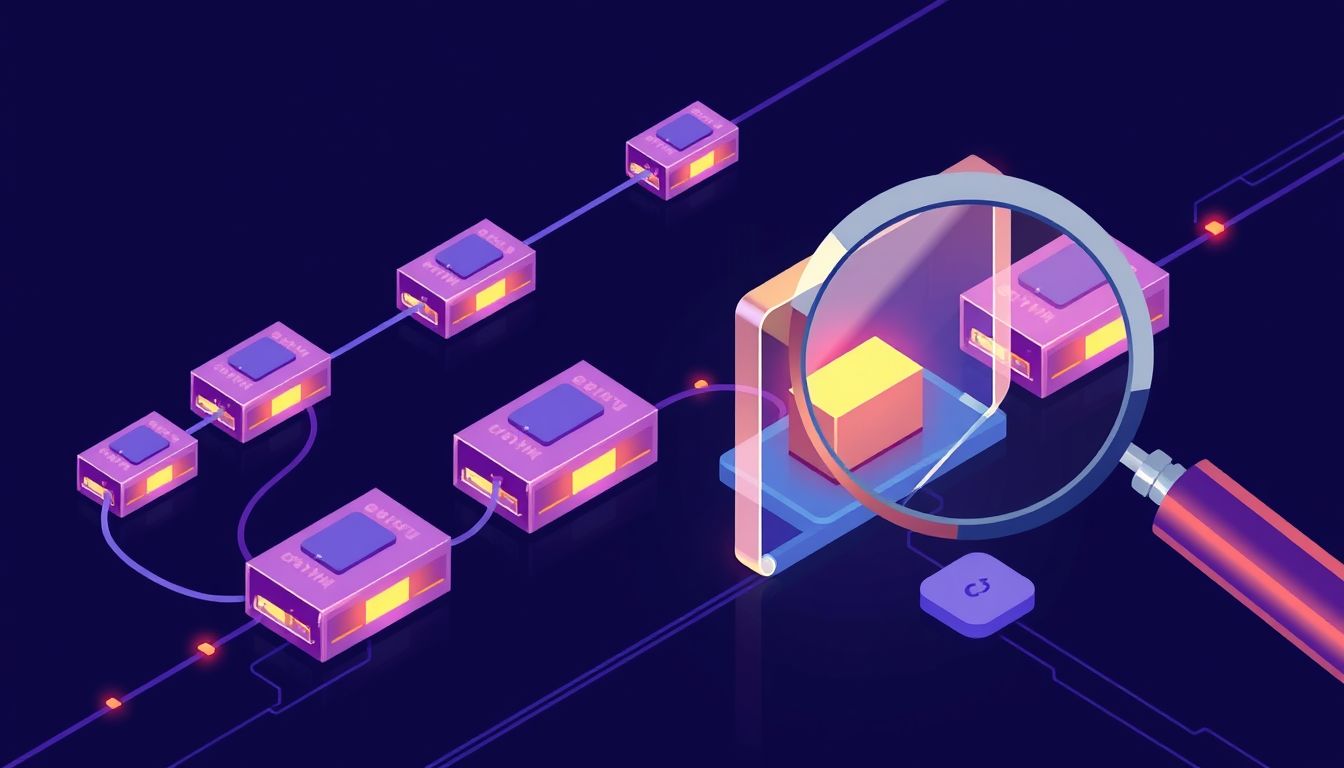
Securing Pull Requests Against Supply Chain Risk
Every dependency you add to package.json, every third-party GitHub Action referenced by tag instead of SHA, every unsigned commit merged without a second look — these are the entry points attackers use to compromise software supply chains. Securing pull requests against supply chain risk isn't a checkbox exercise; it's the last controllable gate before external code, unreviewed dependencies, and unverified contributors become part of your production system. The 2024 XZ Utils backdoor and the 2021 Codecov bash uploader compromise both traveled through ordinary-looking pull requests and CI configuration changes that nobody flagged as unusual.
Most teams treat pull request review as a code-quality function — catch bugs, enforce style, verify logic. Supply chain risk lives in a different part of the diff: the package-lock.json update nobody reads line by line, the .github/workflows/ci.yml edit that swaps a pinned action for @latest, the new npm postinstall script that phones home. This article walks through a concrete, repeatable workflow for finding those risks before merge, not after a CVE disclosure forces a scramble.
Why the Pull Request Is Your Supply Chain's Last Checkpoint
Package registries, container base images, and third-party CI actions are external trust boundaries you don't control. You can't audit every maintainer of every transitive dependency in your node_modules tree — Socket's and Sonatype's annual supply chain reports both put the median Node.js project at several hundred transitive packages, most pulled in without anyone on the team ever opening their source. What you can control is the moment those changes enter your repository: the pull request.
This matters because most supply chain compromises don't announce themselves as security incidents. They look like routine maintenance:
- A dependency bump that also updates a
postinstallscript. - A GitHub Action version pin changed from
v3tov3.1(a mutable tag, not a commit). - A new contributor's first PR adding a small utility function that also modifies
.npmrcor.env.example. - A CI workflow edit that adds
pull_request_targetinstead ofpull_request, silently granting write access to fork-based PRs.
None of these trip a linter. All of them are visible in a diff if someone — or something — is specifically looking for them. Securing pull requests against supply chain risk means building that specific-looking-for-it habit into your review process, rather than assuming your existing "does this code work" review will catch it as a side effect. It usually won't, because the reviewer's attention is on logic correctness, not trust boundaries.
The teams that get burned aren't careless — they're reviewing for the wrong thing. A senior engineer can approve a perfectly correct, well-tested PR that also happens to widen CI permissions or pull in a typosquatted package, because that's not what they were scanning for. That's the gap this whole workflow is built to close.
It also explains why "we already do code review" is a weak defense in a postmortem. A review process optimized for correctness and readability can run for years without ever once asking "did this change our trust boundary" — until the day it does, and the answer is yes, and nobody noticed because nobody was assigned to ask.
What "Supply Chain Risk" Actually Means Inside a Diff
"Supply chain security" gets used broadly enough to become meaningless unless you break it into categories you can actually check for in a pull request. In practice, PR-level supply chain risk falls into four buckets:
- Dependency risk — new or updated packages, transitive dependency shifts, install-time scripts, and typosquatted or hijacked package names.
- CI/CD pipeline risk — changes to workflow files, third-party Actions pinned by mutable tags, secrets exposure, and permission escalation via
pull_request_targetorworkflow_runtriggers. - Provenance risk — unsigned commits, force-pushes that rewrite history on a shared branch, and contributors whose identity or account history can't be verified.
- Build artifact risk — container base image changes, checksum mismatches, and build scripts that fetch and execute remote code at build time.
Each category needs a different check, and none of them is caught reliably by a general "review this code for bugs" pass. A logic bug and a supply chain compromise look identical in a diff viewer until you know specifically what to look for — the difference is in what question the reviewer is asking, not how carefully they're reading. This is also why static analysis alone tends to miss supply chain issues: most static analyzers are built to find code-quality defects in first-party code, not trust and provenance problems in third-party dependencies and pipeline configuration.
It helps to assign each category an owner, even informally. Dependency risk might sit with whoever manages the package registry policy; CI/CD risk with the platform or DevOps lead; provenance with whoever owns branch protection settings; build artifact risk with whoever maintains the container base images. Without an owner, each category tends to get reviewed by "whoever happens to notice," which in practice means it doesn't get reviewed consistently at all — and consistency is the entire point of securing pull requests against supply chain risk as a repeatable process rather than a one-time audit.
A Concrete Workflow for Securing Pull Requests Against Supply Chain Risk
Here's a workflow you can implement without new tooling budget, in roughly a day of setup:
- Gate dependency manifest changes behind a required review label. Configure branch protection so any PR touching
package.json,requirements.txt,go.mod,Cargo.toml, or a lockfile requires an explicit "dependency-reviewed" approval from a second person, separate from general code approval. - Diff lockfiles, not just manifests. A one-line version bump in
package.jsoncan pull in a dozen transitive changes inpackage-lock.json. Require the lockfile diff be visible in the PR — never.gitignoreit — so reviewers see the full resolved tree, not just the requested version. - Pin GitHub Actions to a commit SHA, not a tag.
uses: actions/checkout@v4can be repointed by the maintainer (or an attacker who compromises their account) without your repository changing at all.uses: actions/checkout@b4ffde65f46336ab88eb53be808477a3936bae11cannot. - Run automated dependency and secret scanning on every PR, not on a schedule. Nightly scans catch problems after they've already shipped to staging or production. PR-time scans catch them before merge.
- Require signed commits on protected branches. GitHub supports commit signature verification natively — enforce it so unsigned commits are visibly flagged in the PR UI rather than silently accepted.
- Treat CI workflow file changes as security-sensitive by default. Any diff touching
.github/workflows/should route to whoever owns pipeline security, even if the rest of the PR is unrelated.
None of these steps require exotic tooling — most are branch protection rules, CODEOWNERS entries, and GitHub's built-in Actions and secret-scanning features. The GitHub Actions security hardening guide covers permission scoping and pull_request_target risks in more depth than most teams realize they need until they've been burned once.
Rolling this out in stages tends to work better than trying to enforce all six steps on day one. A reasonable sequence: SHA-pin Actions in week one (low effort, immediate benefit), add the dependency-reviewed label requirement in week two, enable secret scanning and PR-time dependency scanning in week three, and enforce signed commits last, since it's the change most likely to require a conversation with contributors about their local git setup.
How a Routine Dependency Bump Becomes an Incident
It's worth walking through a realistic scenario end to end, because the abstract categories above don't convey how ordinary the entry point usually looks. A contributor opens a PR titled "bump lodash to 4.17.21 for security fix" — a completely legitimate-sounding change that would normally sail through review in under a minute. The manifest diff shows exactly one line changing.
The lockfile diff, if anyone opens it, tells a different story: fourteen transitive packages resolved to different versions, one of them a package published for the first time eleven days earlier under a name one character off from a popular utility library. Nothing in the PR title or description hints at this. The only way to catch it is to have made "open the lockfile diff" a required step, not an optional one, for every PR that touches a dependency manifest — which is exactly what step two of the workflow above is designed to force.
This is also where the four-day-old package detail matters more than it seems. Legitimate packages accumulate download history, GitHub stars, and issue threads over months; a typosquatted replacement usually has none of that, because it exists only to be pulled in by exactly this kind of drive-by dependency bump. A 30-second check of the npm or PyPI page for any unfamiliar transitive package — not the one named in the PR title, the ones that showed up alongside it — catches a disproportionate share of these attempts before merge.
Locking Down Dependencies: Lockfiles, SBOMs, and Pinning Strategy
Dependency risk is the highest-volume category — most PRs that touch external code do so through a manifest change — and also the easiest to automate a first line of defense for. Start with pinning strategy: exact versions (1.4.2, not ^1.4.2) reduce the surface area for a maintainer account compromise to silently reach your build, at the cost of manually managing more version bump PRs. Semantic-range pinning is faster to maintain but means a compromised patch release can reach production the same day it's published, with no PR review at all if you're using automated merge bots without a human gate.
Software Bill of Materials (SBOM) generation, whether via npm sbom, Syft, or GitHub's native dependency graph, gives you a point-in-time record of exactly what shipped in a given release — useful for incident response, and increasingly expected under frameworks like NIST's Secure Software Development Framework. But an SBOM is a record, not a control. It tells you what happened after the fact; it doesn't stop a bad dependency from merging in the first place.
A practical dependency review checklist for reviewers:
- Does the new package have a maintained release history, or was it published for the first time in the last 30 days?
- Does the install process run any scripts (
preinstall,postinstall,prepare)? If yes, read them — line by line, not skimmed. - Is the package name a close match to a well-known one (
reqeustsvsrequests,crossenvvscross-env)? Typosquatting remains one of the cheapest attacks in the ecosystem. - Did the lockfile diff introduce transitive packages unrelated to the stated change?
- Is the dependency pulling from the official registry, or has a
.npmrc/pip.confscope been quietly redirected to a private or unfamiliar registry?
Automating the first three checks with a supply chain scanner (Socket, Snyk, or GitHub's own dependency review action) removes the manual burden for the common case, freeing human reviewers to focus on the judgment calls — like whether a new dependency is actually necessary at all.
It's also worth setting an explicit organizational policy on when a new dependency needs a justification comment in the PR description, versus when it can be added without one. A reasonable line: any dependency adding more than a handful of new transitive packages, or one with fewer than a year of release history, requires a one-sentence explanation of why it was chosen over alternatives already in the codebase. This costs almost nothing to enforce via a PR template checklist item, and it forces the "do we actually need this" conversation to happen before merge rather than during a later dependency audit.
Hardening CI/CD: GitHub Actions, Secrets, and Third-Party Runners
CI pipelines are attractive targets precisely because they hold the credentials — cloud deploy keys, npm publish tokens, container registry access — that dependency compromises are usually trying to reach. A PR that modifies a workflow file deserves the same scrutiny as one modifying production infrastructure code, because functionally, it often is production infrastructure code.
| Risk pattern | Why it's dangerous | Mitigation |
|---|---|---|
Action pinned by mutable tag (@v3) |
Maintainer or compromised account can silently change behavior | Pin to commit SHA; use Dependabot to open PRs for SHA updates |
pull_request_target trigger |
Runs with write-level secrets against fork PR code | Restrict to pull_request; require manual approval for first-time contributors |
| Secrets exposed to fork PRs | Forked PR code can read secrets.* in some trigger configurations |
Use environment protection rules requiring reviewer approval before secrets are injected |
| Unrestricted third-party Actions marketplace usage | Any published Action can be a supply chain vector | Allow-list Actions by publisher/org at the organization settings level |
Build scripts fetching remote code at build time (curl | bash) |
Bypasses all package-manager-level review entirely | Ban unpinned remote script execution in CI policy; require vendored or hash-verified scripts |
GitHub's own settings let you require approval for workflow runs from outside collaborators and restrict which Actions can run in an organization — both are configuration changes, not new tooling. If your team hasn't audited .github/workflows/ permissions in the last quarter, that's a half-day task worth prioritizing above almost anything else on this list, because a single overprivileged workflow can undo every other control described here.
Self-hosted runners deserve a separate mention, since they're increasingly common for cost or performance reasons and carry a different risk profile than GitHub-hosted runners. A self-hosted runner that executes code from a public fork's PR inherits whatever access that runner's host machine has — which, if it's the same machine running your deploy scripts, can mean a malicious PR gets a path to production infrastructure it was never supposed to touch. GitHub explicitly recommends against using self-hosted runners for public repositories accepting external PRs for exactly this reason; if you do it anyway, isolate the runner in a disposable, network-restricted environment.
Commit and Contributor Provenance: Signing, SLSA, and Attestations
Provenance answers a specific question: can you prove that the code in this PR came from who it claims to, and that it hasn't been altered since? GitHub's commit signature verification (GPG, SSH, or Sigstore-based) gives every commit a "Verified" badge visible directly in the PR timeline — but only if signing is enforced, not merely available. An unenforced feature protects nobody.
The SLSA framework (Supply-chain Levels for Software Artifacts) formalizes provenance requirements into levels, from basic build tracking at SLSA 1 to fully hermetic, verifiable builds at SLSA 4. Most small-to-mid teams won't need SLSA 4 rigor, but even SLSA 1 — documented, scripted builds rather than manual, undocumented ones — closes a real gap: it makes it possible to answer "what exactly produced this artifact" months later during an incident review.
Concretely, provenance hardening for PRs means:
- Enforce required commit signing on protected branches, not just recommend it.
- Use GitHub's branch protection to require a linear history, preventing force-push rewrites that can hide malicious commits mid-branch.
- Adopt Sigstore-based keyless signing for build artifacts and container images, so provenance doesn't depend on individual developers managing long-lived GPG keys.
- Flag first-time contributors' PRs for mandatory maintainer review before any CI run with secret access, even if your project is open source and welcomes external contributions.
Securing pull requests against supply chain risk at the provenance layer is less about catching a specific malicious diff and more about making sure that, if something does slip through, you can reconstruct exactly what happened and when — which is often the difference between a contained incident and a multi-week forensic investigation.
Contributor account age and history are worth a quick manual glance even without formal tooling. A GitHub account created three weeks ago, with a first PR that touches CI configuration or adds a new external dependency, isn't automatically malicious — plenty of legitimate new contributors exist — but it's exactly the profile worth routing through a mandatory second reviewer rather than a fast-track approval, especially on repositories with any external contribution surface at all.
Where AI Code Review Fits — and Where It Doesn't
AI-assisted PR review is genuinely useful for supply chain risk, but only for a specific slice of it: reading diffs for patterns a human reviewer might skim past under time pressure. A model reviewing a PR can flag an unpinned Action version, a suspicious postinstall script, a permission change in a workflow file, or a dependency version regression — the same way it flags a null-pointer risk or an off-by-one error — because these are pattern-recognition problems in a diff, which is exactly what LLM-based review is structurally good at.
What it can't do is replace registry-level scanning, SBOM generation, or organizational policy enforcement. An AI reviewer reading a single PR has no visibility into whether a package was published for the first time yesterday, or whether your org's Actions allow-list is even configured. That's infrastructure and dependency-graph awareness, not diff-reading — a different problem that security-focused AI review tooling increasingly pairs with, rather than replaces.
CodeMouse runs multiple models (Claude, GPT, Gemini) against every pull request specifically to catch this class of issue — a CI permission change, an unpinned dependency, an inconsistency between a PR's stated purpose and what its diff actually touches — inline, before a human reviewer spends time on it. It doesn't replace SCA scanning or SBOM tooling; it catches what a distracted human reviewer, focused on "does this logic work," is likely to approve without a second look. Multi-model consensus specifically reduces the false-negative risk of relying on a single model's blind spots — see how that consensus logic works in practice for the mechanics.
Metrics That Prove Your Supply Chain Controls Are Working
Controls you can't measure tend to erode quietly — a branch protection rule gets disabled "temporarily" for a hotfix and never re-enabled, a scanning action gets skipped for a "quick" dependency bump. Track a small set of metrics so drift is visible before it becomes an incident:
| Metric | What it tells you | How to measure it |
|---|---|---|
| % of PRs touching dependency manifests with a second reviewer sign-off | Whether the dependency-review gate is actually being followed | Query merged PR data via GitHub's REST API for label/reviewer combinations |
| Mean time from CVE disclosure to patch merge | Real-world responsiveness, not just scanner coverage | Compare NVD/GHSA disclosure timestamps to merge timestamps for the affected dependency |
| % of Actions pinned by SHA vs tag across all workflow files | Exposure to mutable-tag supply chain attacks | Script a repo-wide grep for uses: lines lacking a 40-character SHA |
| % of commits on protected branches with verified signatures | Provenance enforcement in practice, not policy | GitHub's commit API exposes verification status per commit |
| Number of first-time contributor PRs requiring manual CI approval | Whether fork-based risk is actually gated | Audit workflow run approval logs |
None of these need a dashboard vendor — most can be pulled with a scheduled script against GitHub's REST or GraphQL API and logged to a spreadsheet monthly. The point isn't precision; it's catching the trend before a control silently degrades to zero. Teams that review these numbers quarterly tend to catch policy drift within one review cycle instead of after an incident forces the audit.
Treat a sudden drop in any one of these metrics the same way you'd treat a spike in production error rate — as a signal worth a same-week investigation, not something to note and revisit at the next quarterly planning meeting. A gate that was enforced at 95% last quarter and 60% this quarter usually means a specific process change (a new CI template, a policy exception granted for a hotfix, a team reorg) quietly broke enforcement, and it's much cheaper to find that change now than after it's been the norm for six months.
Building the Habit, Not Just the Checklist
Securing pull requests against supply chain risk works best as a habit distributed across your review process, not a single gate one person owns. Branch protection rules and required reviewers enforce the floor; a reviewer culture that specifically asks "what did this PR change about our trust boundaries" catches what automation misses. Start with the highest-leverage, lowest-effort changes — SHA-pinning Actions, requiring lockfile diffs, enforcing commit signing — before investing in SBOM pipelines or SLSA attestation infrastructure.
If you want a broader checklist for what a thorough PR review should cover beyond supply chain concerns specifically, the GitHub pull request checklist is a useful companion to this workflow. And if you're evaluating how AI-assisted review fits into an existing GitHub workflow without adding per-seat costs for every engineer touching a PR, CodeMouse's docs walk through setup as a GitHub App alongside your existing branch protection and CI configuration — a flat-rate layer added to the controls described above, not a replacement for them.
Ultimately the strongest version of this program is the one that survives staff turnover — where the checks live in CODEOWNERS, branch protection settings, and CI policy rather than in one senior engineer's head. Document the workflow above in your repository's CONTRIBUTING.md or a dedicated SECURITY.md, so a new hire reviewing their first dependency-bump PR knows exactly which questions to ask, and securing pull requests against supply chain risk stops depending on any single person remembering to ask them.